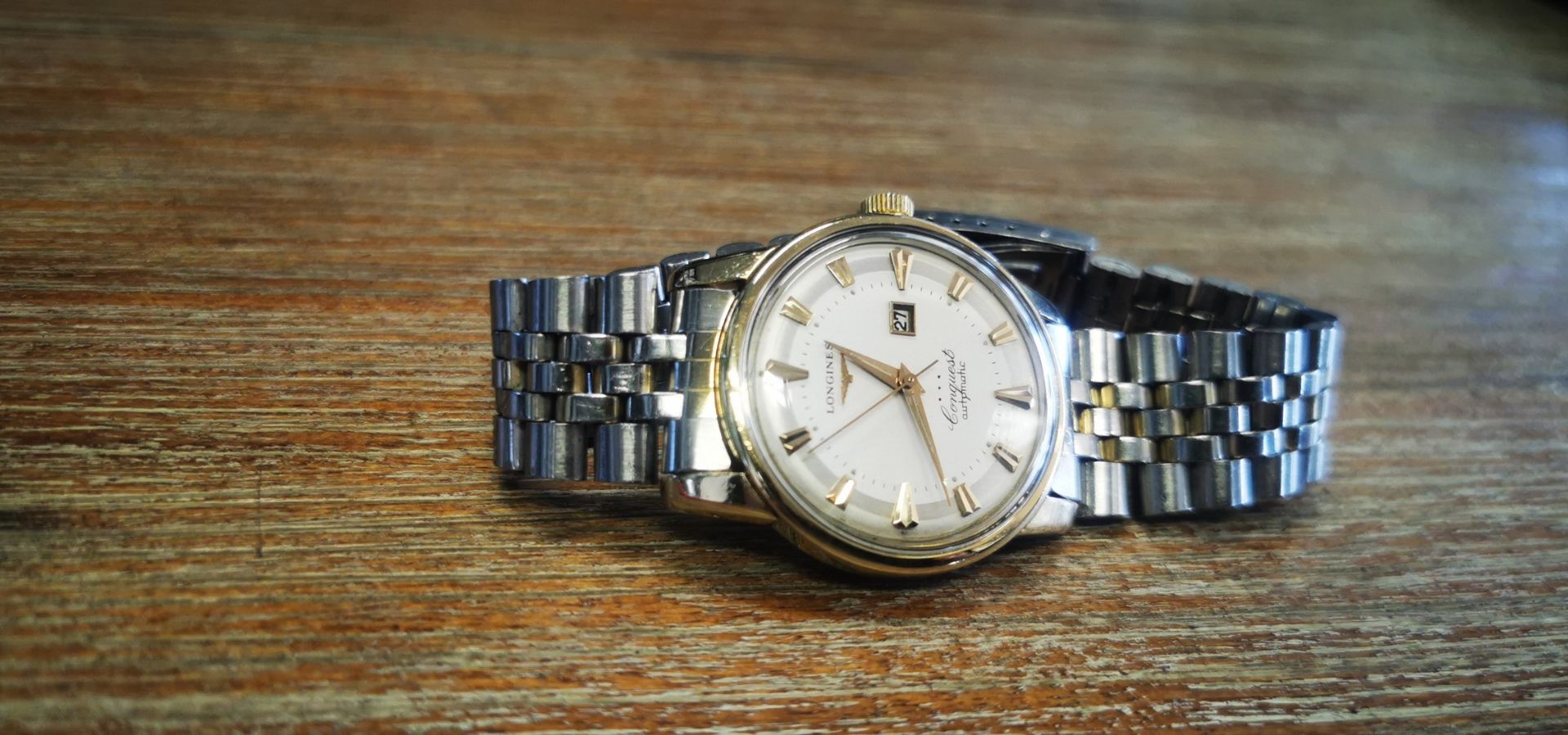
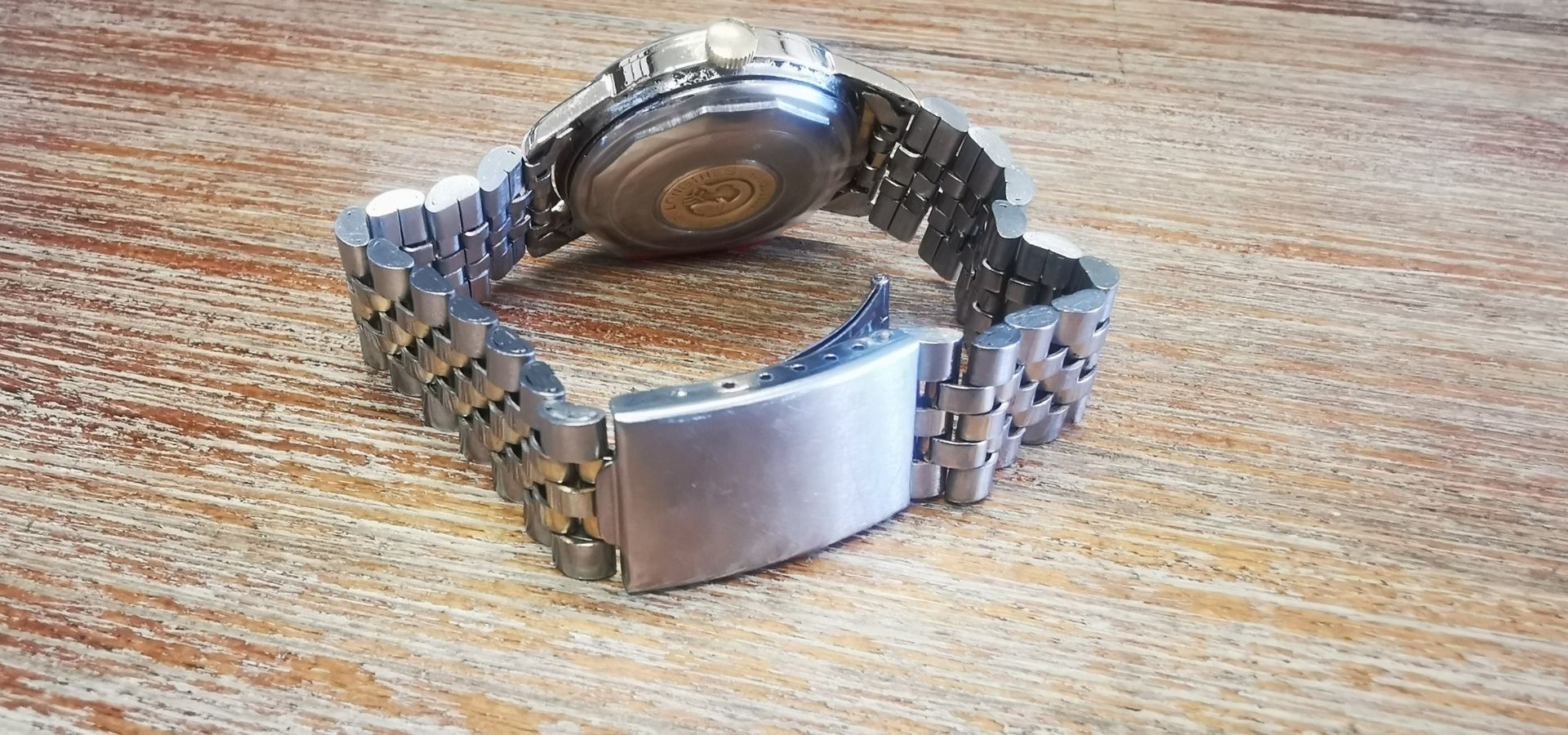
This vintage Longines Conquest Automatic, powered by the Longines caliber 19ASD, was brought to our watchmaking workshop in Geneva for a complete mechanical restoration.
The watch showed several issues related to its age and repair history: a broken winding stem, a non-functional crown, a cracked crystal, as well as various signs of wear and mechanical issues within the movement.
The goal of the restoration was to restore reliable operation while preserving as many original components as possible and maintaining the character of this vintage Longines.
Initial Diagnosis
Before any work was performed, the watch underwent a complete diagnostic inspection.
Movement and Gear Train
Inspection of the Longines caliber 19ASD revealed several areas requiring attention:
- dried lubricants due to age;
- excessive play within the gear train;
- lateral play at the seconds wheel pivot;
- signs of wear on several pivots;
- several mechanical adjustments required within the movement.
These issues can directly affect power transmission and the overall stability and performance of the movement.
Regulating Organ and Escapement
The inspection also revealed several issues requiring the watchmaker’s attention within the regulating organ and escapement.
The hairspring required correction, the beat needed adjustment, and additional work was necessary within the escapement and regulating system.
On a vintage movement such as the Longines caliber 19ASD, these issues must be addressed before the watch can be properly regulated.
Winding Stem and Crown
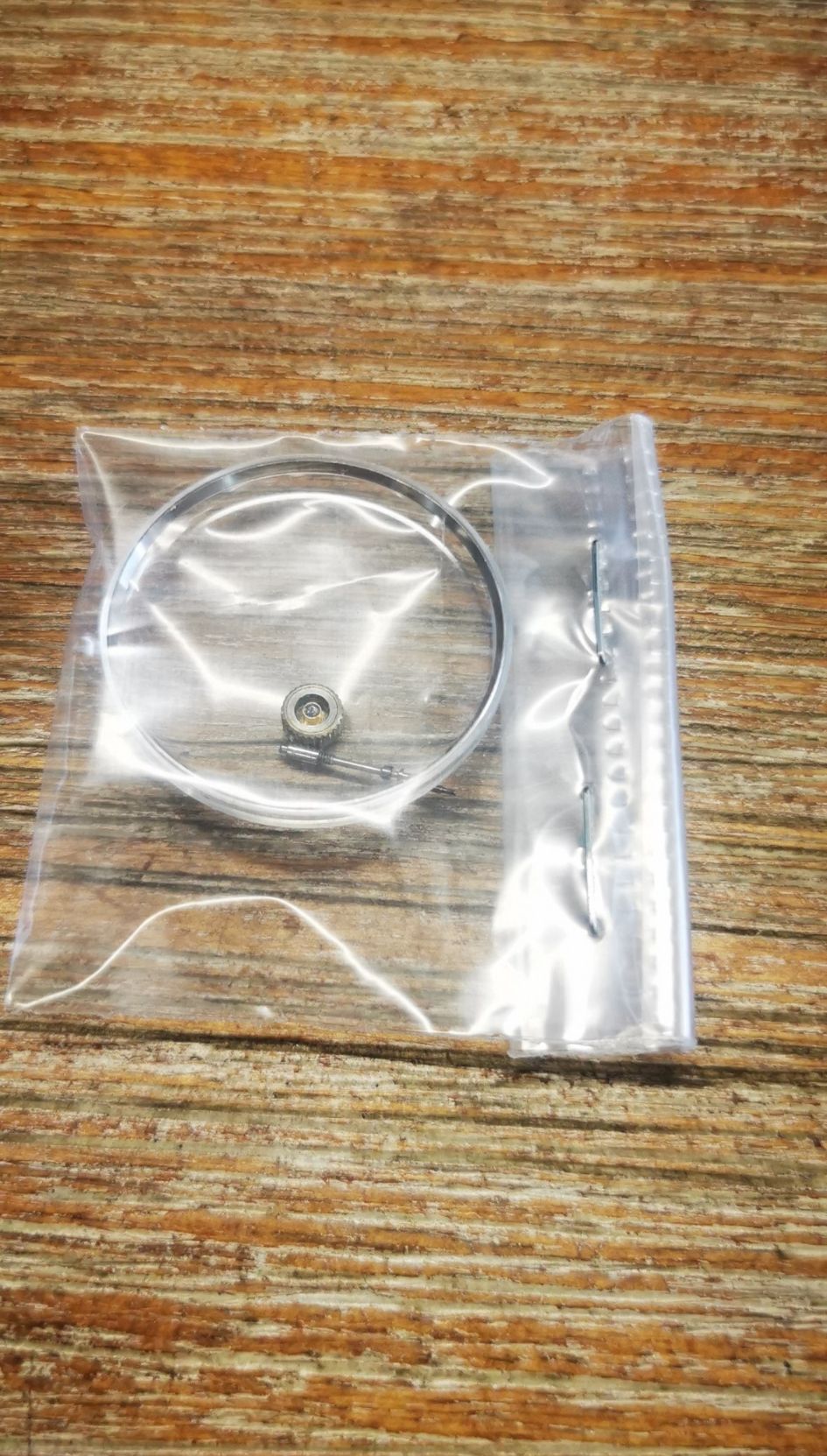
The winding stem was broken.
Closer inspection showed that it had previously been repaired using a stem extension, which had also broken.
A replacement stem compatible with the Longines caliber 19ASD therefore had to be sourced. The crown was also no longer functional and required replacement to restore proper winding and time-setting operation.
Crystal
The acrylic crystal had a small crack along one side.
Replacement was necessary to properly protect the dial and hands while maintaining an appearance consistent with the vintage character of the watch.
Water Resistance
The inspection also determined that water resistance could not be guaranteed.
The condition of the case-back gasket seating surface, together with the age and condition of other case components, prevented reliable water resistance from being restored.
With a vintage watch, it is important to distinguish between restoring the mechanical movement and restoring the original water-resistance specifications.
Work Performed
Following the diagnosis, the necessary work was carried out to restore the proper operation of this Longines Conquest Automatic.
✓ Complete overhaul of the automatic mechanical movement
✓ Correction of identified wear and excessive play
✓ Work on the regulating organ and escapement
✓ Restoration of the winding and time-setting system
✓ Replacement of the winding stem
✓ Replacement of the crown
✓ Replacement of the acrylic crystal
✓ Movement lubrication
✓ Regulation and rate testing
✓ Final functional checks
The objective was to preserve as many existing components as possible while restoring reliable performance appropriate for the age of the watch.
Results After Restoration
Following the restoration, this Longines Conquest Automatic regained stable mechanical operation.
The winding and time-setting system was restored, the mechanical issues identified during the initial diagnosis were corrected, and the movement was regulated and tested.
The new crystal once again provides proper protection for the dial while preserving the vintage appearance of the watch.
Due to the condition of the case, however, the watch should still be considered non-water-resistant and worn accordingly.
What May Have Caused These Issues?
In the case of this Longines Conquest, several factors may have contributed to the problems identified during the inspection.
Age of the watch
Over time, lubricants deteriorate and dry out, while mechanical components gradually develop wear and excessive play.
Natural movement wear
Pivots, wheels, and other contact points are continuously subjected to friction whenever the watch is running.
Previous repairs
The winding stem, for example, had previously been repaired using an extension. With a vintage watch, work performed over several decades often becomes an important part of the diagnostic process.
Aging of the case and external components
The crystal, crown, gaskets, and their contact surfaces also deteriorate over time, which can eventually make reliable water resistance impossible to guarantee.
Our Recommendations for a Vintage Longines
To help preserve a vintage mechanical watch such as this Longines Conquest:
- avoid all contact with water when water resistance cannot be guaranteed;
- never force the crown if winding or setting the time becomes difficult;
- have the watch inspected if you notice a significant change in accuracy or power reserve;
- schedule periodic maintenance to prevent dried lubricants and progressive wear from causing further damage to the movement.
Having a watch inspected before problems become severe often makes it possible to preserve more of its original components.